Focused training, meaningful opportunities, and a team culture where dancers are challenged to grow, supported as individuals, and valued beyond the stage.
Before you join
Know the training, schedule and costs.
Start with your dancer’s placement, then review the proposed weekly classes, rehearsals and season budget before accepting a Company place.
Find the right placement
We consider technique, experience, learning pace and goals. Age alone does not determine the dancer’s level.
Core monthly tuition: Mini $245; Petite / Junior $275; Teen / Senior $315. Expanded training options are listed below.
Competition fees, costumes, required apparel, travel and conventions are separate. The total depends on placement and routines; some conventions may be required.
Promo for Sam’s Thursday Open Technique: dancers practice ballet center work. Tap to watch; sound starts muted.
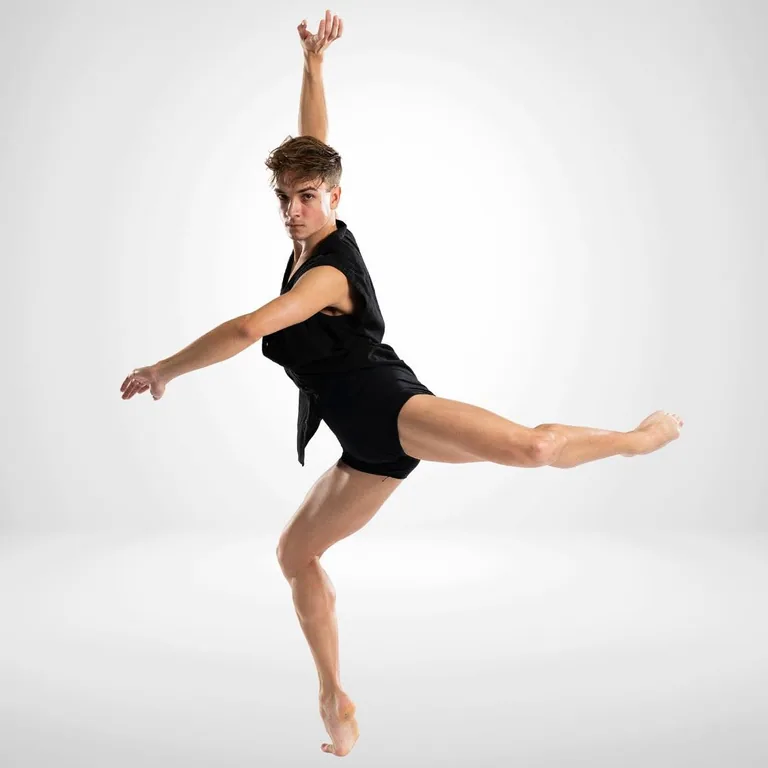
Thursday Ballet with Samuel Johnson
Build your ballet technique, closer to home.
Build alignment, strength, control and musicality in Lenexa with a former professional dancer who holds a BFA in Ballet from the University of Utah.
Open Mixed-Level Ballet Technique · Thursdays, 6–7:30 PM · $80/month
90 minutes for youth dancers across multiple levels, open to dancers from any studio. Enroll in this class on its own while continuing your current training. Company membership is not required.
Monthly tuition; the current month is prorated at checkout. Full monthly tuition continues on the 1st until canceled.
Our Philosophy
What We Believe
We believe excellent training and a supportive culture belong together.
We wanted to create a studio where dancers are challenged to reach ambitious goals, supported as individuals, and given a clear path for growth. A place where decisions are made thoughtfully, communication is open, and every dancer feels valued both as a performer and as a person.
Everything at Catalyst is built with intention. From thoughtful class placement and structured technical development to positive coaching and meaningful performance opportunities, our goal is to help dancers become confident, disciplined, resilient people—not simply stronger performers.
We created Catalyst as a place where dancers can pursue their goals, families can feel informed and connected, and everyone has the opportunity to belong.
That purpose is reflected in our name. A catalyst inspires growth and creates momentum—and we hope the experiences built here make a positive impact that extends far beyond the studio.
How We Work
The Catalyst Standard
The standards that guide our training, communication, and decisions throughout the season.
Purposeful Training
Every class and rehearsal has a clear objective. Dancers build technique, artistry, confidence, and consistency through intentional instruction.
Clear Communication
Families receive straightforward information about schedules, expectations, costs, and decisions so they can plan with confidence.
Positive Accountability
Dancers are held to meaningful standards while receiving specific, constructive corrections that support individual growth.
Long-Term Development
We develop healthy, resilient dancers with skills and habits that matter beyond the next event or competition season.
Company Pathways
Competition Team Divisions
Age provides a starting point. Final placements reflect readiness, maturity, training needs, and the environment in which each dancer can grow best.
01Ages 5–8
Mini Company
An age-appropriate introduction to Company training that builds strong habits, confidence, musicality, and teamwork.
Primarily 45-minute classes
Focused foundational training
Introduction to competitive structure
Supportive, age-appropriate environment
Base Tuition$245/mo
Unlimited Total$265/mo
02Ages 8–13
Petite / Junior Company
A progressive pathway for dancers ready to strengthen technique, responsibility, versatility, and performance confidence.
Mix of 45 and 60-minute classes
Increased technical training focus
Expanded rehearsal structure
Growing competition experience
Base Tuition$275/mo
Unlimited Total$305/mo
03Ages 13+
Teen / Senior Company
Advanced training for committed dancers developing artistry, leadership, versatility, and higher-level performance skills.
Primarily 60–75 minute classes
Advanced training and performance focus
Leadership and mentorship development
Long-term dancer development pathway
Base Tuition$315/mo
Unlimited Total$345/mo
Tuition billed monthly via auto-pay on the 1st · 10% sibling discount on second dancer · Costumes, competitions and apparel billed separately
Open to All Studios
Open Training
Optional technique classes open to youth dancers from any studio. Enroll in a single class independently — no other program required.
Open Mixed-Level Ballet Technique
$80/month
Samuel JohnsonThursdays, 6:00 PM–7:30 PMInferno
Build strength, refine technique, and grow your confidence in this 90-minute ballet class with Samuel Johnson. Designed for youth dancers across multiple levels, class combines focused barre work with center exercises to develop alignment, balance, control, and musicality in a supportive environment.
Open to youth dancers from all studios. Dancers can enroll in this class independently, making it a great option for additional ballet training alongside their current dance schedule.
$80/month · current month prorated at checkout · full monthly tuition on the 1st
A Sustainable Path
Serious Training. Room for Life.
Focused Company training and a full life outside the studio can belong together.
We recognize that dancers and families have different goals. Some dancers want focused Company training while preserving time for school, family, friends, and other interests. Others want to spend as much time in the studio as possible and pursue every available opportunity.
Catalyst’s schedule was intentionally designed to support both.
Our core Company pathway provides the training and rehearsals dancers need to grow and contribute meaningfully to their team. Dancers who want a more immersive experience can choose expanded or unlimited training across additional styles and technique classes.
Neither path makes a dancer more or less valued. Our goal is to help every dancer find a healthy, sustainable level of training that matches their ambitions, age, readiness, and life outside the studio.
Understanding Placement
How Our Levels Work
Company levels describe the type of challenge and support a dancer needs—not their value or potential.
Levels 1 / 2
Developing Company Training
Designed for dancers building intermediate technical strength, consistency, flexibility, musicality, and performance confidence. Training reinforces foundational skills while introducing more challenging progressions and increased personal responsibility.
Levels 3 / 4
Advanced Company Training
Designed for experienced dancers working at an advanced technical and artistic level. Classes emphasize control, strength, versatility, complex progressions, individual artistry, and preparation for higher-level performance opportunities.
All Levels
Open Company Training
Cross-level training that brings Company dancers together for shared technique, specialty classes, conditioning, and rehearsals. Faculty provide appropriate progressions and corrections for each dancer’s placement.
Ballet Training
Technique That Builds Dancers.
Assistant Artistic Director Samuel Johnson leads progression-based ballet training focused on alignment, musicality, control, and safe, sustainable development.
Weekly Schedule
Company Training Schedule
Explore the current Company calendar by day. Level badges and class descriptions help families understand the purpose of each training block.
Week of Oct 12 · Central Time
4:30 PM
5:15 PM
Ballet 2/3
StudioInferno
InstructorSamuel Johnson
4:30 PM
5:15 PM
Strength & Conditioning 1/2
Levels 1 / 2
Details coming soon. Call the studio at (913) 361-6004 with questions about this class.
StudioIgnite
InstructorMandi Marie
5:15 PM
6:00 PM
Jazz 3/4
Levels 3 / 4
Advanced jazz training emphasizing alignment, strength, flexibility, turns, jumps, directional changes, musicality, style, and performance precision.
StudioIgnite
InstructorMandi Marie
6:00 PM
6:45 PM
Contemporary 3/4
Levels 3 / 4
Advanced contemporary training that combines technical control, floorwork, musical interpretation, dynamics, partnering concepts, and authentic performance quality.
StudioIgnite
InstructorMolly Richardson
6:45 PM
7:30 PM
LLTT 3/4
Levels 3 / 4
Advanced leaps, turns, and technique training focused on power, control, multiple rotations, complex jump progressions, alignment, and consistent execution.
StudioIgnite
InstructorMandi Marie & Molly Richardson
The People Behind the Training
Meet Your Competition Faculty
Experienced educators and working artists who value clear instruction, thoughtful corrections, and each dancer’s individual development.
“The training I've received so far has been incredible. I love that the teachers actually demonstrate what they're teaching and give corrections that help me improve. I've been a competitive dancer for years, and I've never experienced training at this level. Every class challenges me and makes me want to work harder.”
— Competitive Dancer
How We Train
Training Philosophy
01
Weekly Technique Classes
Foundation-first training across multiple styles develops transferable skills, control, and versatility.
02
Structured Rehearsals
Intentional rehearsal time develops performance quality, teamwork, musicality, and confidence.
03
Team Performances
Meaningful performance opportunities help dancers grow as artists and learn to represent their team well.
04
Competition Preparation
Focused preparation supports strong performances while protecting time for continued technical development.
05
Guest Instruction & Conventions
Additional educators and training environments expose dancers to new perspectives, styles, and expectations.
The Season
Season Structure
3
Regional Competitions
1
Out-of-State Nationals
Aug–June
Full Season
The season also includes performance opportunities, guest instruction, master classes, a parent showcase, and conventions based on placement. Some conventions may be required; all are strongly recommended for the breadth of training they provide in a single weekend.
What We Ask
Company Expectations
Company works best when expectations are clear, communication is early, and dancers understand how their preparation supports the entire team.
Weekly Training
Dancers attend their assigned technique classes consistently so progress can build from week to week.
Team Rehearsals
Rehearsals depend on the full group. Families communicate conflicts early so faculty can help the dancer stay informed and prepared.
Competition Weekends
Dancers arrive prepared for scheduled events. Call times and requirements are communicated as early as possible.
Team Performances
Company members represent Catalyst with professionalism, kindness, and pride at performances and showcases.
Personal Responsibility
Age-appropriate preparation, focus, and follow-through help each dancer contribute meaningfully to the team.
Positive Team Culture
Dancers are expected to be coachable, support their teammates, and help create a respectful studio environment.
Questions From Families
Competition Company FAQ
Straightforward answers to the questions families ask most often before joining Company.
Does my dancer need competition experience to join?
Not always. Previous competition experience can be helpful, but it is not the only factor we consider. We look at a dancer’s current training, musicality, work ethic, coachability, performance quality, and readiness for the commitment. If you are unsure, contact us and we will help determine the most appropriate next step.
How many hours will my dancer train each week?
Weekly hours vary by age, placement, and the pathway your family chooses. Every Company dancer receives a core schedule with the classes and rehearsals needed for their team. Dancers who want a more immersive experience may add expanded or unlimited training. Families receive the proposed schedule before accepting a placement so they can make an informed decision.
What expenses are separate from monthly tuition?
Competition fees, costumes, required apparel, travel, conventions, and certain special opportunities are billed separately from monthly tuition. The exact amount depends on a dancer’s placement and routines. We provide expected costs and payment timing as clearly and as early as possible so families can plan for the season.
How many competitions does Catalyst attend?
The planned season includes three regional competitions and one out-of-state national competition. We intentionally leave time between events for continued training, feedback, recovery, and meaningful improvement rather than spending every weekend competing.
Are dance conventions required?
Some conventions may be required based on a dancer’s placement or Company opportunity, and those expectations will be communicated in advance. We strongly recommend convention attendance whenever possible because dancers can experience several educators, training styles, and perspectives in one weekend. That exposure builds adaptability, versatility, confidence, and a broader understanding of the dance industry.
What happens if my dancer needs to miss a class or rehearsal?
We understand that illness, school responsibilities, family events, and unexpected conflicts happen. Families should communicate with faculty as early as possible so we can help the dancer stay informed and catch up appropriately. Consistent attendance remains important because choreography, formations, and team preparation build from week to week, but our goal is to handle unavoidable absences with clarity, care, and reasonable support.
How are Company placements decided?
Placement is based on the whole dancer—not age alone. Faculty consider technical readiness, performance quality, maturity, work ethic, learning pace, team needs, and where the dancer is most likely to grow successfully. A thoughtful placement gives each dancer appropriate challenge while protecting confidence and long-term development.
Can a dancer join mid-season?
Yes. We believe every dancer should have the opportunity to find a dance home, even if they move, discover Catalyst, or become ready after the season begins. We can arrange an individual evaluation and discuss the best path based on timing, readiness, available space, and the point we have reached in the season. A late inquiry may affect routine placement, but we will always look for a meaningful way to welcome the dancer into the Catalyst community.
Will competitive dance take over our family’s schedule?
It does not have to. Catalyst was intentionally structured for dancers with different goals. The core Company pathway provides the training and rehearsals needed to contribute fully to the team while preserving room for school, family, friends, and other interests. Dancers who want to spend more time in the studio can choose expanded or unlimited training. We help families select a sustainable path that matches the dancer’s ambitions and life outside the studio.
What is Open Training?
Open Training is a set of optional technique classes from our Company track that any youth dancer can enroll in independently. There is no audition, team placement, or additional program requirement—you simply register for the individual class you want. It is designed for dancers who want high-level supplemental technique without joining the full Competition Company.
Can dancers from other studios enroll in Open Training?
Yes. Open Training classes are open to youth dancers from any studio in the Kansas City metro. Many families use these classes as supplemental technique training alongside their existing studio commitments. Dancers train with Catalyst faculty in the same progression-based technique our Company dancers receive, and there is no requirement to leave or change your current studio.
How much does Open Training cost?
Open Training is billed as monthly tuition for each class you enroll in, with pricing listed on each class in the Open Training section above. If you enroll after the month has started, checkout charges a prorated amount for the remainder of that month. Full monthly tuition then continues on the 1st of each month until you cancel. There are no competition fees, costume costs, or team commitments attached to Open Training enrollment.
Not Sure Which Path Fits?
Tell us about your dancer’s age, experience, and goals. We will recommend an appropriate starting point.
Find Your Place
Ready to Take the Next Step?
Whether your dancer is ready for the full Company experience or your family simply wants to learn more, we would be glad to help you understand the path forward.